Thursday, April 20, 2023
But, it's not the final word
Indeed, in the Christian story Jesus is the second Adam, the Son of God sent forth not one day after the next but in the “fullness of time” (Gal 4:4). In the Christian telling of it, the fact that Jesus was the “son of Adam, the son of God” meant that he could restart the story, write the first chapter of human life—again. Where the First human being was tempted and failed, the Second resisted temptation and began things anew: you shall not, he says to the Tempter, tempt the Lord thy God. He who “knew no sin” was able to redo creation itself, to set on a new foundation that which human life had become. “Neither circumcision nor uncircumcision is anything—but new creation!” (Gal 6:15). “If anyone is in Christ—new creation! The old things have gone away and, behold!, new things have come!” (2 Cor 5:17).—One True Life: The Stoics and Early Christians as Rival Traditions, 218

The final enemy
Moreover, our bodies are destined for death and decay. Sooner or later but one and all, we are mastered by the power of death. Try to overcome death, the Christian story says, and you will see how it, too, is a power more powerful than you. Demons, unclean spirits, Beelzebul, other “gods and lords” (1 Cor 8:5)—all these, too, are more powerful than the human creature. But death is that against which we finally fight and to which we inevitably lose. Against all those both ancient and modern who would say we can become cozy with death, the Christians say otherwise. Death is the final enemy.—One True Life: The Stoics and Early Christians as Rival Traditions, 217
Wednesday, April 19, 2023
All that is not God
For the Christians, as for the Jews, the story did not begin with all that is but with God’s creation of all that is not God. The world had a beginning. It had not always been here but was instead created by the one and only God and was distinct from him. The story that unfolds in Scripture is thus the story of God’s dealings with all that is not God.—One True Life: The Stoics and Early Christians as Rival Traditions, 216
The Stoic paradox
At the heart of the Stoic story as it is expressed in Seneca, Epictetus, and Marcus there is thus a profound tension, dialectic, or, perhaps, paradox. To learn what we are and how to become what we are—rational mortals—we must be inducted into the Stoic way of being. Reason is not what we think for ourselves but a specifically traditioned communal craft. And yet to learn the Stoic craft of reason is to go into ourselves, to become solitary, self-sufficient fortresses of right judgment. There remain other Stoics—and there is the need to teach and be apprenticed—but exactly to the extent that we succeed in the Stoic life, even other Stoics are finally removed from us by the same life that initially drew us together in the common task of learning how to love wisdom.—One True Life: The Stoics and Early Christians as Rival Traditions, 215
Come, Holy Spirit, our hearts inspire
679 C. M.
The Spirit’s enlightening influences.
The Spirit’s enlightening influences.
COME, Holy Ghost, our hearts inspire;
Let us thine influence prove ;-
Source of the old prophetic fire;
Fountain of life and love.
2 Come, Holy Ghost, for moved by thee
The prophets wrote and spoke:
Unlock the truth, thyself the key;
Unseal the sacred book.
3 Expand thy wings, Celestial Dove;
Brood o’er our nature’s night;
On our disorder’d spirits move,
And let there now be light.
4 God, through himself,
We then shall know, If thou within us shine;
And sound, with all thy saints below,
The depths of love divine.
Charles Wesley
Methodist Episcopal hymnal (1870 edition)
Tuesday, April 18, 2023
On the merry-go-round
Ultimately, however, in the Stoic narrative of repair, these three focal points were not fully separate things, each with its own independent logic and modus operandi. They were, rather, tightly interwoven and interdependent ways of talking about the defining contours of the philosophical life: by getting impressions sorted into the right columns we extirpate the passions and grow in virtue; by extirpating the passions we can sort impressions correctly and grow in virtue; and by growing in virtue we can sort impressions correctly and extirpate the passions. Only by developing these three skills simultaneously will we return to our nature.—One True Life: The Stoics and Early Christians as Rival Traditions, 213
<idle musing>
Right. No wonder the early Christians found a fertile field! Once you are on the merry-go-round of self-improvement, it's only too easy to get discouraged—which is why in our social media age we curate our appearance. What you see isn't who you are is the watchword. Of course, Stoicism is more honest than that! They were actually working on changing and becoming. We, on the other hand, simply chase a virtual reality and try our best to ignore the real one.
How's that working for you?
Yeah. That's what I thought. Come home to Jesus and let him heal the broken self. As it says in Isa 55:
All of you who are thirsty,</idle musing>
come to the water!
Whoever has no money,
come, buy food and eat!
Without money, at no cost,
buy wine and milk!
2 Why spend money for what isn’t food,
and your earnings
for what doesn’t satisfy?
Listen carefully to me
and eat what is good;
enjoy the richest of feasts. (Isa 55:1–2 CEB)
Give it time
The Stoic story of human damage presumes that not even reading Stoic works can be done well without reason’s repair. Unlike Augustine’s story of his encounter with Paul’s Romans, we cannot just pick up and read, but must instead be taught how to read. Reading has an order to it, and this order corresponds to the repair that is necessary to make one into a good reader. Which is to say that we can’t be good readers until we become the kind of person who can read well. If the story here tells of a seeming paradox—right reading requires reason’s repair but reason’s repair requires right reading—the Stoics assumed that there was time enough to work it out.—One True Life: The Stoics and Early Christians as Rival Traditions, 211
<idle musing>
Sorry. Doesn't work for me. I'm glad the Holy Spirit gives light to the blind; no need to go stumbling around and trying to fix yourself so you can fix yourself. The Holy Spirit does the fixing—and the teaching.
</idle musing>
Tozer for Tuesday
America is not a God-conscious nation; we are a secular people. We have what the Bible calls a profane mind. And even in those who may toss God a bone when making a political speech to get the votes of a religious-minded people, if you probe in far enough you will find that our leadership is composed of a secular-minded people. I do not use the word in a wrong sense but in the sense that Esau was secular-minded. This world was the point of interest for that man, and that is all right for us, too, provided we have another and higher interest. But Esau did not have it, and the nation of America does not have it much.—A.W. Tozer, Living as a Christian, 97
<idle musing>
And if that was true in the 1950s, just think how much truer it is today, 70 years later.
</idle musing>
Monday, April 17, 2023
A variation on a theme of discipleship
Internal to the Stoic way of reasoning is the claim that its pattern is visible in a human life and not apart from it. The particulars of the exercise that is Stoic reasoning are not analytically verifiable statements but lived shapes. Or, perhaps, the statements of logic that are analytically enticing find their analysis in the course of a Stoic life. A Cato, a Musonius, a Seneca, an Epictetus—these are necessary in the strictest sense to what Stoic reasoning is taken to be. Get an exemplum, says Seneca to Lucilius, so that you see reason in the flesh. Call it to mind so that you know how to become what you seek (Ep. 11.10). According to the Stoic story, the path to nature that is reason’s repair involves imitation of those who have gone before and shown the way.—One True Life: The Stoics and Early Christians as Rival Traditions, 211
<idle musing>
There's a lot to be said for examples. But as Christians, we are told to imitate Jesus, which is a far higher ideal than a Seneca or a Cato or an Epictetus or a Marcus Aurelius. And, we are given the Holy Spirit to empower and guide us in that path.
Yep. I'll take the Christian way over the Stoic way, even while acknowledging that they have much of value. But, it is more a stream of light in a darkened corner than the flood of light in the revelation of God in Jesus.
</idle musing>
Not a lot of hope in that…
In stark contrast to both the modern scientific sense of evolutionary time and the Jewish or Christian sense that God precedes his creation, the Stoic story has no part without humanity. It is simply assumed that human beings are part of what the cosmic cycle produces or contains. We do not “come on the scene," nor do we go off it. As a thing, though not in its individual parts of course, we have always been here and always will be. The cosmic context in which our collective being is lived is thus eternal. Time may be marked in this or that linear way concurrently with our more limited existence (for example, “We will gather next Thursday after sunrise”), but in the big picture time is not a measurement that corresponds to progress or, for that matter, regress. It is, rather, only a local marker in the eternal pulsation that is our movement to and from the conflagration.—One True Life: The Stoics and Early Christians as Rival Traditions, 208
Sunday, April 16, 2023
Who wins?
God always wins. The last word is always His, as was the first.—Elie Wiesel, Messengers of God, 190
<idle musing>
And we'll leave the book on that note. As I said, a delightful little read. I heartily encourage you to find the time to read it. At less than 200 pages, it's even a manageable read : )
</idle musing>
Saturday, April 15, 2023
The righteous one
What does all this mean? That one is not born a Tzaddik [righteous one]; one must strive to become one. And having become a Tzaddik, one must strive to remain one.—Elie Wiesel, Messengers of God, 167–68
<idle musing>
Add in the power of the Holy Spirit, and I'll endorse that view 100 percent!
</idle musing>
Sustaining grace
541 L. M.
Sustaining grace prayed for.
Sustaining grace prayed for.
TAUGHT by our Lord, we will not pray
Out of the world to be removed;
But keep us, in our evil day,
Till patient faith is fully proved.
2 From sin, the world, and Satan’s snare,
The members of thy Son defend,
Till all thy character we bear,
And grace matured in glory end.
Charles Wesley
Methodist Episcopal hymnal (1870 edition)
Friday, April 14, 2023
He accompanies us
Jacob has just understood a fundamental truth: God is in man, even in suffering, even in misfortune, even in evil. God is everywhere. In every being, not only in the victim. God does not wait for man at the end of the road, the termination of exile; he accompanies him there. More than that: He is the road, He is the exile. God holds both ends of the rope, He is present in every extremity, He is every limit. He is part of Jacob as He is part of Esau.—Elie Wiesel, Messengers of God, 132
And even then…
This inability to live more than one tradition at a time means that in a crucial and, truth be told, rather sobering sense, even the central patterns of reasoning in one tradition—as that tradition understands them—will not be understood in another. Moreover, insofar as we do not participate in the alien tradition we seek to query, we cannot know what it is that we do not know. Short of conversion, we are literally shut out of one by the life we live in another. Rival rationalities are not surmountable by learning.—One True Life: The Stoics and Early Christians as Rival Traditions, 204
<idle musing>
And that should make us humble. And cause us to lower our expectations on what we can discover about the past. Part of it will always be unretrievable. No matter how much we dig up or how much we read, the past is still the past and much of it is beyond our grasp.
</idle musing>
It's untranslatable
It would seem to follow, then, that those who have learned a second first language are the best translators. They are those who know how both traditions work and who therefore can put the terms of one into the terms of the other. Maclntyre argues, however, that while there may well be cases where translation of this or that can happen even between divergent traditions, a more significant marker of true traditioned learning is the ability to recognize when translation is impossible, when it’s impossible to say with the words of one tradition what can be said in another (even with all the extensive interpretative glosses and paraphrases that go with the most difficult cases). Precisely because the recognition of “untranslatability presents barriers around or over which no way can be discovered,” those who have learned a second first language become “inhabitants of boundary situations.” They do not blend conflicting traditions into a sort of Esperanto but instead exhibit conflict by means of reasoning on the edges of rival rationalities. Rivalry between traditions, that is, is most profoundly recognized by the fact of untranslatability.—One True Life: The Stoics and Early Christians as Rival Traditions, 203
<idle musing>
This makes loads of sense. There are many times when I'm trying to explain something from the ANE/OT/HB and the words and concepts just aren't there in our modern language. No matter how much you try, it just doesn't satisfy. It's untranslatable.
</idle musing>
Labor on in vain
630 L. M.
No success without God’s blessing.
No success without God’s blessing.
EXCEPT the Lord our labours bless,
In vain shall we desire success;
Except his guardian power restrain,
The watchman waketh but in vain.
2 'Tis useless toil our stores to keep,—
Early to rise and late to sleep,—
Unless the Lord, who reigns on high,
His providential care supply.
3 Grant, Lord, that we may ever flee
For guidance and for help to thee ;
Thy blessing ask, whate’er we do,
And in thy strength our work pursue.
William Hiley Bathurst
Methodist Episcopal hymnal (1870 edition)
Thursday, April 13, 2023
Original sin?
The concept of original sin is alien to Jewish tradition. We do not inherit the sins of our fathers, even though we may be made to endure their punishment. Guilt cannot be transmitted. We are linked to Adam only by his memory, which becomes our own, and by his death, which foreshadows our own. Not by his sin.—Elie Wiesel, Messengers of God, 30
<idle musing>
I picked up this book at our local used bookstore. It was on the discount cart for $1.00. I more than got my money's worth. I'm only going to cherry pick a few choice paragraphs from it, but if you ever see a copy, it would be worth your trouble to pick it up. It's not very common in libraries, but I think you can find one at the Internet Archive. Not sure if they still allow you to check it out, what with the court ruling (we won't get into that travesty of justice right now!).
OI, that aside, I find this view of Adam very interesting and have been leaning that way more and more. Once you remove the strongly Augustinian and Reformer-heavy views of the Bible, it seems to be the plain reading of the text. Having said that, there is a lot to be said for the idea of original sin—just remove all the sexual transmission stuff from it.
</idle musing>
A second "first language"
On analogy with learning another language, Maclntyre argues that the only way to learn another tradition is to learn it as a “second first language.” Because traditions are “languages-in-use”—their way of reasoning is inextricably tied to the concrete cultural life of the community that bears the tradition—learning a second first language cannot be done simply by matching sentences from one’s second language to one’s first (as if using a basic-phrase travel guide to a foreign country). Such sentence matching can only produce “tokens,” discrete phrases that can work effectively within very limited circumstances to achieve a desired effect (for example, Wo sind die Toiletten? = Where is the bathroom?). Producing tokens should not be confused with learning a language well enough to move fluidly within the cultural patterns that are the language’s lived expression. Rather, “the learning of a language and the acquisition of cultural understanding are not two independent activities.” If traditions are lived languages, then, they must be “learned as second first languages or not at all."—One True Life: The Stoics and Early Christians as Rival Traditions, 202
<idle musing>
Boy, ain't that the truth! That's why interlinears are worthless. And why trying to learn a language as an exercise in "decoding" is a waste. Languages represent a culture; they express a way of life. I like this idea of learning a culture as a "second first language." Naming it as such makes sense of some of the things I've been noticing in my approach to the ANE and biblical texts.
They are alive in a different way than they used to be. Could it be that finally after almost 45 years I'm starting to internalize some of this stuff? (Well, in fairness, it's been happening for longer than recently, but I just noticed it moreso recently.)
</idle musing>
It's the narrative
This is not at all to say, of course, that we should think of narrative as something that is only in the background of practices, normative judgments, metaphysical accounts of the world, and so forth. Narrative, to the contrary, is present in all layers of a tradition’s particularity (even if inchoate or left unarticulated). Nor should we think of any sort of regular historical order, as if narratives must precede practice or reflective questioning. Again, to the contrary, it could easily be the case that narratives arise in light of questions pertaining to long-established practices (why do we do what we do?) or particular queries about existence, for example (why is the world here rather than not?). But as long as practices make sense and as long as “metaphysical” queries proceed beyond the mere statement of the questions themselves, narratives will be found and/or constructed and (re)told. To put it into terms more familiar to scholars of the New Testament and early Christianity, demonstrating that Paul’s letters have a “narrative substructure” simultaneously elucidates the ground of their possibility as intelligible speech. Which is but another way of saying that even in naming particular texts as Christian or Stoic, We presuppose a narrative that allows us to locate them in just this way.—One True Life: The Stoics and Early Christians as Rival Traditions, 200–201
Fixed on God
621 L. M.
Self-dedication to the Lord.
Self-dedication to the Lord.
O LORD, thy heavenly grace impart,
And fix my frail, inconstant heart;
Henceforth my chief desire shall be
To dedicate myself to thee.
2 Whate’er pursuits my time employ,
One thought shall fill my soul with joy:
That silent, secret thought shall be,
That all my thoughts are fix’d on thee.
3 Thy glorious eye pervadeth space;
Thy presence, Lord, fills every place;
And wheresoe’er my lot may be,
Still shall my spirit rest with thee.
4 Renouncing every worldly thing,
And safe beneath thy spreading wing,
My sweetest thought henceforth shall be.
That all I want I find in thee.
Jean Frederic Oberlin, trans. Lucy Sarah Atkins Wilson
Methodist Episcopal hymnal (1870 edition)
<idle musing>
I was able to track down some info on the author; you can find it here. Especially interesting is his desire to educate the local populace. And that Oberlin, OH is named after him, which means that Oberlin College is heir to his methods. Fascinating stuff one learns in reading about the authors of hymns, isn't it?
</idle musing>
Wednesday, April 12, 2023
It's relational
If, like a complex craft, a tradition of inquiry becomes a tradition only in the course of history and as the participants become aware of their participation in it as participation in a history of particular beliefs, skills, practices, and so on, then narrative is that which renders the history intelligible to its participants as a history of this or that particular kind.
The ability to locate one’s life as a particular mode-of-being-in-the-world, that is, depends upon the story that makes a life locatable in this specific way. By working through a juxtaposition of the narratives that fund the shapes of life called Christian and Stoic, we are thus thinking relationally with that which makes it possible to be Stoic or Christian in the first place.—One True Life: The Stoics and Early Christians as Rival Traditions, 199
<idle musing>
So this is the way forward. We'll see how it differs from the typical methodology—and if the results are worth it.
</idle musing>
Alienation
The self who knows in the way Engberg-Pedersen wants to know is the self who emerged after Descartes and especially Locke, the “disengaged subject.” The “key to this figure,” as Charles Taylor puts it, “is that it gains control through disengagernent.” Not only does the “disengaged self” create a domain that cannot touch him—placing his object of scholarly attention within a framework of objects to be investigated without prior normative commitrnent—he also “takes a stance” toward himself that “takes him out of his normal way of experiencing the world and ourselves.” We posit a self that is beyond the experience of the world that we ourselves have, and imagine the existence of its ability to think. Our disengagement presumes, that is, an objectification of the mind—a thing capable of reasoning quite by itself—that simultaneously alienates us from ourselves. “Modern disengagement,” Taylor rightly notes, “calls us to a separation from ourselves through self-objectification.”—One True Life: The Stoics and Early Christians as Rival Traditions, 196
<idle musing>
He's still deconstructing! Not that he isn't correct, but how much more destruction do we need to lay the edifice low?
</idle musing>
Grateful praise
604 C. M.
Morning: Grateful praise.
Morning: Grateful praise.
LORD of my life, O may thy praise
Employ my noblest powers,
Whose goodness lengthens out my days,
And fills the circling hours.
2 While many spent the night in sighs,
And restless pains and woes.
In gentle sleep I closed my eyes,
And undisturb’d repose.
3 O let the same almighty care
My waking hours attend;
From every danger, every snare,
My heedless steps defend.
4 Smile on my minutes as they roll,
And guide my future days ;
And let thy goodness fill my soul
With gratitude and praise.
Anne Steele
Methodist Episcopal hymnal (1870 edition)
<idle musing>
Interestingly, hymnary.org substitutes two verses for verse 2:
2 Preserved by Thine almighty arm,</idle musing>
I pass the shades of night,
Serene and safe from every harm,
And see returning light.3 When sleep, death's semblance, o'er me spread,
And I unconscious lay;
Thy watchful care was round my bed
To guard my feeble clay.
Tuesday, April 11, 2023
Good advice from Tozer (Tozer for Tuesday)
The way to get Christians together is not to form some kind of political united front but to bring them close to Jesus.—A.W. Tozer, Living as a Christian, 97
A rival viewpoint
In a far-reaching and crucial respect, the encyclopedic way of knowing is a hermeneutic posture not of enlightened clarification but of contestation and negation. Modern projects of absorption are, in brief, self-deceived. Etic language is not the outside presentation of something inside (emic). It is simply a rival construal of true knowledge.—One True Life: The Stoics and Early Christians as Rival Traditions, 195
It's outside our capabilities
Over against the encyclopedic assumptions of modern scholarly discourse, both the Christians and the Stoics say that we cannot see clearly without habituation into their specific traditions of practical thought. The Christians in particular go even farther: ordinary human language is broken, “natural” reason deeply damaged, and the cure for such brokenness and damage out of our reach. To return to blindness: repair of our defective sight is beyond our skills and even our greatest capacities. The only help for our predicament comes, as Paul might put it from an “apocalyptic” intervention—something that is entirely outside ordinary human possibilities.—One True Life: The Stoics and Early Christians as Rival Traditions, 195
<idle musing>
I think I see where he's going now. But how is he going to get there??
</idle musing>
A charge to keep
570 S. M.
For diligence and watchfulness.
For diligence and watchfulness.
A CHARGE to keep I have,
A God to glorify;
A never-dying soul to save,
And fit it for the sky.
To serve the present age,
My calling to fulfil,—
O may it all my powers engage,
To do my Master’s Will.
2 Arm me with jealous care,
As in thy sight to live;
And O, thy servant, Lord, prepare,
A strict account to give.
Help me to watch and pray,
And on thyself rely,
Assured, if I my trust betray,
I shall forever die.
Charles Wesley
Methodist Episcopal hymnal (1870 edition)
<idle musing>
This is one of my favorite hymns; it sums up the calling of a Christian very nicely. Most hymnals break it up into four verses instead of two, but no matter. I've noticed that before about this hymnal. I wonder if it was to keep the songleader from destroying the context of a hymn's theology by saying, "Let's sing the first, third, and fourth verses" or some such (a practice I always hated).
Just an
</idle musing>
Monday, April 10, 2023
Is an etic look possible?
Just as it does not occur to the encyclopedist that he has mistaken his type of rationality for rationality itself, so it does not occur to the etic linguist that scholarly discourse is not the language of natural reason but only one particular way of thinking about human understanding. And so on. In short, rather than a neutral discourse about things from which we have academic distance, “etic” understanding is a universal claim about the interpretative power of modern scholarship and the unitary rationality that undergirds it. Modern scholarship conducts its comparisons within a more capacious form of reasoning than particular traditions themselves exemplify. There is a larger language in which Stoicism or Christianity can be spoken without substantive loss. 194
<idle musing>
He's still not done deconstructing is he?
</idle musing>
Ye praying souls, rejoice!
561 S. M.
The hearer of prayer.
The hearer of prayer.
YE praying souls, rejoice,
And bless your Father’s Name;
With joy to him lift up your voice,
And all his love proclaim.
2 Your mournful cry he hears;
He marks your feeblest groan,
Supplies your wants, dispels your fears,
And makes his mercy known.
3 To all his praying saints
He ever will attend,
And to their sorrows and complaints
His ear in mercy bend.
4 Then let us still go on
In his appointed ways,
Rejoicing in his Name alone,
In prayer and humble praise.
Medley
Methodist Episcopal hymnal (1870 edition)
<idle musing>
Interesting that a Google search for this hymn only turns up four hits—and all of them are to this particular hymnal, although two are to a compilation that just lifted the hymns, complete with number and republished them. Consequently, I have no way of knowing if someone, somewhere, has come up with an author for it.
</idle musing>
Excising the parts that don't fit
Modern scholars who believe they are comparing similarity/difference along a spectrum called morality arbitrarily excise certain parts from more densely complicated wholes and name these parts “moral.” What is here obscured is the fact that the ancients did not think they were reflecting upon moral questions or developing disciplines to lead them in moral lives. They thought, instead, that they were reflecting upon and practicing how to live an entire life. It is true that they wrote much about the virtues, of course, but the virtues were exemplified within wider philosophical accounts of how to live. In short, where the modern way of speaking makes one think in terms of a spectrum, or a theme, or a particular area of life along or within which ancient views can be plotted or placed, the ancients did not detach their “moral” thinking from their total lives. To the degree that we compare parts without the density of the whole, we continue to project modern abstractions onto the ancient sources and obscure the fact that what is really juxtaposed in the question of “comparison" is a full way to live. “Morality” in the ancient sense is a specifically traditioned way to live a full human life.—One True Life: The Stoics and Early Christians as Rival Traditions, 193
<idle musing>
This is very true. But he still hasn't given us a way forward, has he? He seems to be hinting at one, but it still not obvious to me.
</idle musing>
Sunday, April 09, 2023
The spirit of prayer
556 S. M.
The spirit of prayer.
The spirit of prayer.
THE praying spirit breathe!
The watching power impart;
From all entanglements beneath,
Call off my peaceful heart;
My feeble mind sustain,
By worldly thoughts oppress’d;
Appear, and bid me turn again
To my eternal rest.
2 Swift to my rescue come ;
Thine own this moment seize;
Gather my wand’ring spirit home,
And keep in perfect peace:
Suffer’d no more to rove
O’er all the earth abroad,
Arrest the pris’ner of thy love,
And shut me up in God.
Charles Wesley
Methodist Episcopal hymnal (1870 edition)
Saturday, April 08, 2023
Pray without ceasing
553 C. M.
Pray without ceasing.
SHEPHERD Divine, our wants relieve
In this our evil day;
To all thy tempted foll’wers give
The power to watch and pray.
2 Long as our fiery trials last,-
Long as the cross we bear,-
O let our souls on thee be cast
In never-ceasing prayer.
3 Till thou thy perfect love impart;
Till thou thyself bestow,
Be this the cry of every heart,—
I will not let thee go;—
4 I will not let thee go, unless
Thou tell thy name to me;
With all thy great salvation bless,
And make me all like thee.
5 Then let me on the mountain-top
Behold thy open face;
Where faith in sight is swallow’d up,
And prayer in endless praise.
Charles Wesley
Methodist Episcopal hymnal (1870 edition)
Friday, April 07, 2023
Citing NABU
This is more for my personal reference than anything, so I don't need to search through a million email records to find it. If you find it useful, great.
Nouvelles Assyriologiques Breves et Utilitaires (NABU) is a periodical that publishes short notes (as the title says) four times a year. I've found it cited at least four or five different ways. A few years ago, I consulted SBL about how they recommended citing it. Because I can never remember how or where the email response is filed, I'm putting it here.
Obviously, you need to add NABU to the abbreviations list. Then cite it as Author. "Article title." NABU year.issue: pages, no. ###. E.g.,
Peker, Hasan. “Some Remarks on the Imperial Hittite Sealings from the 2017 Excavations at Karkemish.” NABU 2017.4:178–79, no. 101.
Some presses want you to include a link as well. In this case it is https://sepoa.fr/wp/wp-content/uploads/2018/01/NABU-_2017-4_DEF.pdf.
It would be really nice if NABU would start using DOIs, but meanwhile, we need to do it the long way.
Update (4/7/2023): Here's the link to a comprehensive list of NABU issues along with links to the PDFs of each issue. (I also updated the date of this post.)
Table of Contents for copyediting stuff.
Ancient morality. Did it exist?
The fact that there is no word for morality as such in any ancient or medieval language should already caution us against the assumption that we know what ancient morality in general could be. And, in fact, we do not. The reason is strikingly simple: it did not exist. No one did (or does) conceive or practice morality in general. Just as there is no such thing as religion in general except in the minds of the academics who claim to study it—it does not have beliefs, it does not have practices, it does not have adherents, and so on—there is no such thing as morality in general. Indeed, strictly speaking, we cannot even think it. Morality as such is an abstraction that modern linguistic habits present to us as a possibility for thought; upon inspection, however, it turns out to be impossible to conceive. Try all you’d like; you’ll only be able to come up with particular exernplifications of the thing you think you seek. 192-93
<idle musing>
OK, that's an eye-opening observation. But, again, is there a way forward?
Because it's Friday, I guess we'll have to wait until Monday to find out. This is worse than one of those old serials on TV, where they say, "Tune in tomorrow to find out…"—or worse yet, "Tune in next week"!
</idle musing>
Mistaken assumptions
Engberg-Pedersen’s consistency is admirable, though unsurprising. It is the consistency of the modern encyclopedic view of reason and the power of scholarly knowledge. What Engberg-Pedersen presents as a “natural” or “etic” way of knowing is in fact a historically developed particular epistemological claim of modernity.
The encyclopedia lives on. It would not be difficult to identify similar commitments in the majority of recent comparative work on the Stoics and Christians. Taken as a whole, the body of research by Malherbe and Engberg-Pedersen displays the more fundamental assumptions and intellectual parameters of an entire modern scholarly project—that of mistaking traditions for entries in an encyclopedia.—One True Life: The Stoics and Early Christians as Rival Traditions, 191
<idle musing>
So now what? Is there a way forward? There must be, otherwise the book would end here! How and in what way can we move forward?
</idle musing>
What is prayer?
550 C. M.
What is prayer?
What is prayer?
PRAYER is the soul’s sincere desire,
Utter’d or unexpress’d;
The motion of a hidden fire
That trembles in the breast.
2 Prayer is the burden of a sigh,—
The falling of a tear,—
The upward glancing of an eye,
When none but God is near.
3 Prayer is the simplest form of speech
That infant lips can try;
Prayer, the sublimest strains that reach
The Majesty on high.
4 Prayer is the Christian’s vital breath
The Christian’s native air;
His watchword at the gates of death,-
He enters heaven with prayer.
5 Prayer is the contrite sinner’s voice,
Returning from his ways;
While angels, in their songs, rejoice,
And cry,—Behold, he prays!
6 O Thou, by whom we come to God,
The Life, the Truth, the Way,—
The path of prayer thyself hast trod:—
Lord, teach us how to pray!
James Montgomery
Methodist Episcopal hymnal (1870 edition)
<idle musing>
As I've said before, this guy's biography is inspiring. Oh, and hymnary.org adds two verses, while omitting verse 2:
5 The saints in prayer appear as one,</idle musing>
in word and deed and mind;
while with the Father and the Son
sweet fellowship they find.6 Nor prayer is made on earth alone:
the Holy Spirit pleads,
and Jesus on the eternal throne
for sinners intercedes.
Thursday, April 06, 2023
Assuming the model
Jonathan Z. Smith’s classic point is here rejected in favor of the power of scholarly work on ideas. As all comparativists know, Smith argued that the reason things seem similar to scholars is because the comparative models they make require similarity for their intelligibility as comparative tools. Such models do not, however, actually discern similarity as much as presuppose it or, in Smith’s language, invent it through the “associations” that come with the shape of memory. To risk a tautology, then, the basic point of Engberg-Pedersen’s model—that Paul and the Stoics understand the philosophical logic of conversion and progress in the moral life in significantly similar ways—presupposes the philosophical viability of the model itself. Such viability, however, is tied to the encyclopedic view that life is not determinative of thinking as such; it can instead be cordoned off from pure reason, the domain of ideas. In claiming to focus upon “ideas as ideas,” Engberg-Pedersen repeats the encyclopedists’ conviction that reason’s reasons work the same way regardless of the human lives in which they are actually found. Thought is thinkable, that is, in abstraction from life.—One True Life: The Stoics and Early Christians as Rival Traditions, 189
<idle musing>
Which, as this chapter has argued, is impossible! Again, still mulling over what this entails.
</idle musing>
Tradition! Tradition!
A tradition of inquiry, for Maclntyre, is thus a morally grained, historically situated rationality, a way of asking and answering questions that is inescapably tied to the inculcation of habits in the life of the knower and to the community that originates and stewards the craft of inquiry through time. Tradition in this sense is the word that best describes the forms of life that were ancient Christianity and Stoicism.—One True Life: The Stoics and Early Christians as Rival Traditions, 184
<idle musing>
I could hear the Fiddler on the Roof song, "Tradition! Tradition!," running through my mind as I read this. Of course, he is correct—which has ramifications for what we consider to be scholarship and education, doesn't it? I'm still thinking about what that means, and probably will be for the rest of my life.
But it definitely aligns with Jesus's command to make disciples, doesn't it? Knowledge transfer doesn't transform lives; models do. Not that knowledge transfer isn't important! It definitely is. But in order for that knowledge transfer to stick, it needs to be modeled, which is what this whole chapter is getting at.
</idle musing>
The way of prayer
549 L. M.
Design of prayer.
Design of prayer.
PRAYER is appointed to convey,
The blessings God designs to give:
Long as they live should Christians pray;
They learn to pray when first they live.
2 If pain afllict, or wrongs oppress;
If cares distract, or fears dismay;
If guilt deject; if sin distress;
In every case, still watch and pray.
3 ’Tis prayer supports the soul that’s weak:
Though thought be broken, language lame,
Pray, if thou canst or canst not speak;
But pray with faith in Jesus’ name.
4 Depend on him; thou canst not fail;
Make all thy wants and wishes known;
Fear not; his merits must prevail:
Ask but in faith, it shall be done.
Joseph Hart
Methodist Episcopal hymnal (1870 edition)
Wednesday, April 05, 2023
Apprenticeship?
Fourth, in the same way that an apprentice learns from a teacher how to acquire the skills needed to practice a craft well, a participant in a tradition requires a teacher of the craft of inquiry. It is true, Maclntyre argues, that there is a resident, Inherent potential for transformation; otherwise, we could not learn what we need to know to take part in a tradition. But not only does a teacher “help actualize” such potential in a particular direction we would not necessarily find ourselves, a teacher is also the concrete authority on what we need to learn. “We shall have to learn” from a teacher, says Maclntyre, “and initially accept on the basis of his or her authority within the community of a craft precisely what intellectual and moral habits it is which we must cultivate and acquire if we are to become . . . participants in such enquiry” (63). Learning the rationality of inquiry is not a matter of striking out on one’s own but of submitting to the judgments of those who have already mastered the craft. In this way, the apprentice makes the “prior commitment" necessary to develop the habits that are prerequisite to becoming a competent member of the craft community (60-63).—One True Life: The Stoics and Early Christians as Rival Traditions, 183 (quotations from Alasdair MacIntyre's 1988 Gifford Lectures)
Wisdom required
That someone would need to be wise in order to read texts well is as far from encyclopedic understanding as it is from modern natural science in which wisdom is not taken to be requisite for interpreting the “behavior” of a proton. And yet it is endemic to the notion of tradition as a craft of inquiry. There is an “understanding of [a tradition’s] texts which becomes available only to the transformed self” (82). But this creates an apparent paradox: “Only insofar as we have already arrived at certain conclusions are we able to become the sort of person able to engage in such enquiry so as to reach sound conclusions” (63). How, then, does such transformation occur?—One True Life: The Stoics and Early Christians as Rival Traditions, 183 (quotations from Alasdair MacIntyre's 1988 Gifford Lectures)
Even so! Come Lord Jesus!
540 C. M.
Come, Lord Jesus.
Come, Lord Jesus.
O JESUS! at thy feet we wait,
Till thou shalt bid us rise;
Restored to our unsinning state,-
To love’s sweet paradise.
2 Saviour from sin, we thee receive,
From all indwelling sin;
Thy blood, we steadfastly believe,
Shall make us throughly clean.
3 Since thou wouldst have us free from sin
And pure as those above;
Make haste to bring thy nature in,
And perfect us in love
4 The counsel of thy love fulfil:
Come quickly, gracious Lord!
Be it according to thy will,
According to thy word.
5 O that the perfect grace were given,
Thy love diffused abroad:
O that our hearts were all a heaven,
Forever fill’d with God.
Charles Wesley
Methodist Episcopal hymnal (1870 edition)
Tuesday, April 04, 2023
Not new, just a reminder
Usually, a sentence consists of at least two parts. One part is old known information picked out from the previous context or presupposed by the common knowledge of the speaker and addressee. This would be the theme of the sentence. The other part consists of new, added or invoked information. This part would be the rheme of the sentence.—Galia Hatav, "The Infinitive Absolute and Topicalization of Events in Biblical Hebrew," in Advances in Biblical Hebrew Linguistics, ed. Adina Moshavi and Tania Notarius, LSAWS 12 (Winona Lake, IN: Eisenbrauns, 2017), 214
<idle musing<>
I know, that's not new information, but it's a helpful reminder (see what I did there?).
</idle musing>
Tozer for Tuesday
First, they came “out” of the world. We try to take the world into the church, sanctify it, baptize it, anoint it and try to hide its skulls and crossbones. There must be a coming out; any kind of Christianity, however Orthodox it may sound, that does not major on the doctrine of coming out of the world is inadequate and imperfect.—A.W. Tozer, Living as a Christian, 95
Rationality
To be rational, that is, is not to follow reason’s timeless principles but to participate in the tradition’s particular shape of rationality as it has developed through history: “The participant in a craft is rational qua participant insofar as he or she conforms to the best standards of reason discovered so far, and the rationality in which he or she thus shares is always, therefore . . . understood as a historically situated rationality” (64–65). Rationality is thus learning a particularized skill in the midst of time.“—One True Life: The Stoics and Early Christians as Rival Traditions, 182 (quotations from Alasdair MacIntyre's 1988 Gifford Lectures)
An alternative
The genealogical vanquishing of the encyclopedia does not mean, however that every rival has been laid to rest. Indeed, in MacIntyre’s view, tradition can defeat genealogy on its own terms. But a tradition of inquiry is not simply one more version of pure reason’s best workings; it is, rather, more like a craft…—One True Life: The Stoics and Early Christians as Rival Traditions, 182
Nothing beside my God I want
522 C. M.
The exceeding great reward.
The exceeding great reward.
THY name to me, thy nature grant!
This, only this be given!
Nothing beside my God I want;
Nothing in earth or heaven.
2 Come, O my Saviour, come away;
Into my soul descend;
No longer from thy creature stay,
My Author and my End.
3 The bliss thou hast for me prepared,
No longer be delay’d;
Come, my exceeding great Reward,
For whom I first was made.
4 Come, Father, Son, and Holy Ghost,
And seal me thine abode;
Let all I am in thee be lost,
Let all be lost in God.
Charles Wesley
Methodist Episcopal hymnal (1870 edition)
Monday, April 03, 2023
What? No name?
The preceding considerations show that the way in which the biblical narrator reiers to a given character as speaking or acting subject is not determined solely by accessibility or social status. A factor that is no less important is the position the narrator allocates to this character. The participant who is successful in his undertaking or prevails in the spoken interaction is marked by name and/or title, whereas reference to the character who complies or remains submissive or passive is limited to the verbal form only. In other words, the stylistic shaping of reference is germane to positioning. Positioning by reference, then, is a significant component of the interface between literary theory and the linguistic study of discourse and pragmatics.—Frank Polak, "Participant Tracking, Positioning, and the Pragmatics of Biblical Narrative," in Advances in Biblical Hebrew Linguistics, ed. Adina Moshavi and Tania Notarius, LSAWS 12 (Winona Lake, IN: Eisenbrauns, 2017), 168–169
<idle musing>
Interesting observation. He comes to this conclusion after a study of the book of Ruth.
</idle musing>
Pick and choose
The genealogist thus does not so much make arguments that go toward anything as he does take a momentary stance, pose as a critic for the time being, adopt a particular posture on a certain stage. For him, there are only masks to be worn, roles to be played, for this or that purpose—according to genealogical desire. The style can therefore be personal, even aphoristic, because the mask that is momentarily worn is particular to the role at this (and not that) moment. Foucault, for example, a master of genealogical inquiry, takes the word author to “name a role or function, not a person, and the use of a particular author’s name discharges this function by assigning a certain status to a piece of discourse” (51). Hence can genealogical inquiry dispense with the consistency that universal rationality requires. Authors are momentary functions, texts words that play this or that role, rationality the “this kind” or “that kind” of the role the words play. If “this kind” fundamentally conflicts with “that kind”—or if we can understand “this kind” but are completely puzzled by “that kind”—so much the better.—One True Life: The Stoics and Early Christians as Rival Traditions, 180-81
Can we really understand?
Third, such “as if” academic practice both assumes and continues to transmit the encyclopedic “belief that every rationally defensible standpoint can engage with every other, the belief that, whatever may be thought about incommensurability in theory, in academic practice it can be safely neglected.” There is nothing the university curriculum cannot encompass or absorb into itself, no text or form of life that stands outside the comprehensive capabilities of scholarly study: “The universal translatability of texts from any and every culture into the language of teacher and student is taken for granted. And so is the universality of a capacity to make what was framed in the light of the canons of one culture intelligible to those who inhabit some other quite alien culture, provided only that the latter is our own, or one very like it” (171). The possibility of genuine obstacles to understanding that are endemic to the worlds of both genealogical and traditioned inquiry are completely ignored, treated as if they do not exist. The incomprehensible, the utterly strange to us and our way of knowing—these are systematically denied reality by the framework that prevents the confrontation they require.—One True Life: The Stoics and Early Christians as Rival Traditions, 179 (quotations from Alasdair MacIntyre's 1988 Gifford Lectures)
<idle musing>
This chapter has been/is eye-opening to me. He is revealing the shaky foundations upon which the modern idea of knowledge rests. I would recommend this book for this chapter alone!
</idle musing>
The perfect rest
521 C. M.
The perfect rest from sin.
The perfect rest from sin.
JESUS, my Lord, I cry to thee,
Against the foe within:
I want a constant liberty,
A perfect rest from sin.
2 Thy killing and thy quick’ning power,
Jesus, in me display;
The life of nature, from this hour,
My pride and passion slay.
3 Then, then, my utmost Saviour, raise
My soul with saints above,—
To serve thy will, and spread thy praise,
And sing thy perfect love.
Charles Wesley
Methodist Episcopal hymnal (1870 edition)
Sunday, April 02, 2023
Perfect peace
516 5th P. M. 4 lines 7s.
Perfect peace.
</idle musing>
Perfect peace.
PRINCE of peace, control my will;
Bid this struggling heart be still;
Bid my fears and doubtings cease,-
Hush my spirit into peace.
2 Thou hast bought me with thy blood,
0pen’d wide the gate to God:
Peace I ask—but peace must be,
Lord, in being one with thee.
3 May thy will, not mine, he done;
May thy will and mine be one:
Chase these doubtings from my heart;
New thy perfect peace impart.
4 Saviour! at thy feet to fall;
Thou my life, my God, my all!
Let thy happy servant be
One forever more with thee!
Anon.
Methodist Episcopal hymnal (1870 edition)
<idle musing>
Hymnary.org, which attributes it to Mary Ann Serrett Barber, has this to say about the authorship:
The text of this hymn has also been attributed to Mary Dana Shindler, 1810-1853, an American poet and hymn writer. However, the poem first appeared in the March 3, 1838 edition of Church of England Magazine. Mary Ann Serrett Barber, who was born in England, had many of her poems published in this magazine.Whoever wrote it, it is a marvelous hymn.The Hymns and Hymn Writers of the Church: an annotated edition of the Methodist Hymnal by Charles S. Nutter and Wilbur F. Tillett (Eaton and Mains, 1911)
</idle musing>
Saturday, April 01, 2023
Whate'er offends
318 C. M.
The garner of God.
The garner of God.
COME, thou omniscient Son of man,
Display thy sifting power;
Come, with thy Spirit’s winn’wing fan,
And throughly purge thy floor.
2 The chaff of sin, the’ accursed thing,
Far from our souls be driven;
The wheat into thy garner bring,
And lay us up for heaven.
3 Whate’er offends thy glorious eyes,
Far from our hearts remove;
As dust before the whirlwind flies,
Disperse it by thy love.
4 Then let us all thy fulness know,
From every sin set free;
Saved to the utmost, saved below,
And perfected in thee.
Charles Wesley
Methodist Episcopal hymnal (1870 edition)
Friday, March 31, 2023
But is it possible?
Second, we continue to act in alarge-scale way as if the encyclopedic inquiry is a live option. “Even now the organized institutions of the academic curriculum and the ways in which both enquiry and teaching are conducted in and through those institutions are structured to a significant degree as if we did believe much of what the major contributors to the Ninth Edition believed.” Institutions and curriculum, of course, are not the same thing as the publication outlets for scholarly world—journals, monograph series, and the like—but in fact these outlets often simply reflect the assumptions of the larger university’s structure. How we train is how we publish. “We often still behave as if there is . . . some underlying agreement about the academic project of just the kind in which those contributors believed.” Knowledge, Maclntyre implies, is socialized in a way that contradicts what we now know about knowledge; it is time to recognize the contradiction. “The ghosts of the Ninth Edition haunt the contemporary academy. They need to be exorcised” (171).—One True Life: The Stoics and Early Christians as Rival Traditions, 179 ((quotations from Alasdair MacIntyre's 1988 Gifford Lectures)
Judging the past by the … present of course!
Where the encyclopedists looked to the past, they assumed that all thinkers offered accounts “of the rational status of one and the same timeless subject matter” (28). The measuring of these accounts as better and worse depended upon the perception of progress toward the encyclopedists’ conception of truth—which is to say that the past was judged in light of the present, conceived as the acme of intellectual progress.—One True Life: The Stoics and Early Christians as Rival Traditions, 177 (quotation from Alasdair MacIntyre's 1988 Gifford Lectures)
O for a heart to praise my God
500 C. M.
A perfect heart the Redeemer’s throne.
A perfect heart the Redeemer’s throne.
O FOR a heart to praise my God,
A heart from sin set free ;—
A heart that always feels thy blood,
So freely spilt for me :—
2 A heart resign’d, submissive, meek,
My great Redeemer’s throne;
Where only Christ is heard to speak,—
Where Jesus reigns alone.
3 O for a lowly, contrite heart,
Believing, true, and clean;
Which neither life nor death can part
From Him that dwells within:—
4 A heart in every thought renew‘d.
And full of love divine;
Perfect, and right, and pure, and good,
A copy, Lord, of thine.
5 Thy nature, gracious Lord, impart;
Come quickly from above;
Write thy new name upon my heart.—
Thy new, best name of Love
Charles Wesley
Methodist Episcopal hymnal (1870 edition)
Thursday, March 30, 2023
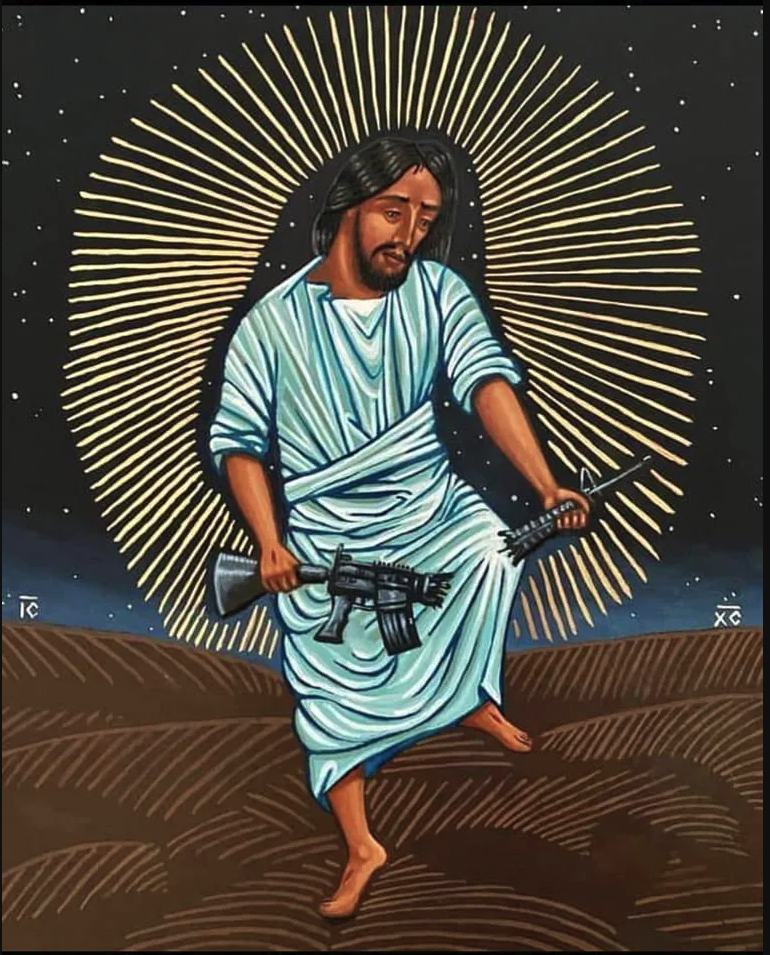
Early persecution
Historians know that official persecution of Christians did not happen until the reign of Decius in AD 251. But focusing on official, legally sanctioned violence can obscure what on any reading is an obvious fact: on a local level and/or ad hoc basis persecution was a part of Christian life from at least the middle of the first century. And from the beginning of the second century—thirty years or so before Justin’s death—the name “Christian” had already become an important political marker. With the clarity of hindsight, the attention given to the name is unsurprising: persecution of Christians qua Christians depends upon the ability to see them as a community, or at least as a particular kind of thing, a way of naming a category or group such that it made sense to try them as Christianoi, Christians.—One True Life: The Stoics and Early Christians as Rival Traditions, 163
A true philosopher?
On the one hand, Justin clearly seeks to create a sense of deep continuity with the pagan tradition and to use this continuity for his own rhetorical advantage in communicating what Christianity actually is. He uses the familiar tropes ofthe philosopher such as the cloak and the movement through various philosophies to draw his readers in by means of something they already understand. This communicative strategy culminates in Justin’s audacious claim that in becoming a Christian, he has become a true philosopher.—One True Life: The Stoics and Early Christians as Rival Traditions, 158
Why study theology?
There are different ways that one can come at Old Testament theology, but my concern is that too often we separate theology from worship. If the goal of theology is the knowledge of the true God, the end result of that experience ought to be adoration and praise and prayer.—Dennis Kinlaw, Lectures in Old Testament Theology, 13
<idle musing>
I was interacting via text message yesterday with someone about some theology, and this quotation came to mind. I had Kinlaw for Old Testament theology (among other classes with him) in the summer of 1983. He would say things like this all the time. His stated goal was that every pastor would be a theologian and every theologian would be a soul-winner.
He modeled that in his teaching. I took every class he offered in those two semesters when he taught at Asbury Seminary after resigning from the presidency of Asbury College. A few of us even coralled him into teaching an independent study of Aramaic one semester and Syriac the next.
</idle musing>
Love divine, all loves excelling
498 9th P. M. 87, 87, 87, 87.
The new creation
The new creation
1 Love divine, all loves excelling,
joy of heav’n, to earth come down,
fix in us thy humble dwelling,
all thy faithful mercies crown.
Jesus, thou art all compassion,
pure, unbounded love thou art.
Visit us with thy salvation;
enter ev'ry trembling heart.
2 Breathe, O breathe thy loving Spirit
into ev’ry troubled breast.
Let us all in thee inherit,
let us find the promised rest.
Take away the love of sinning;
Alpha and Omega be.
End of faith, as its beginning,
set our hearts at liberty.
3 Come, Almighty, to deliver,
let us all thy life receive.
Suddenly return, and never,
nevermore thy temples leave.
Thee we would be always blessing,
serve thee as thy hosts above,
pray, and praise thee without ceasing,
glory in thy perfect love.
4 Finish, then, thy new creation;
true and spotless let us be.
Let us see thy great salvation
perfectly restored in thee.
Changed from glory into glory,
till in heav’n we take our place,
till we cast our crowns before thee,
lost in wonder, love and praise.
Charles Wesley
Methodist Episcopal hymnal (1870 edition)
<idle musing>
One of the best hymns ever written, in my opinion. And a lot of others seem to agree—according to hymnary.org it's in 1808 hymnals! That's a lot of hymnals! And, as far as I can tell, that's just the English ones; it's been translated into other languages, too.
</idle musing>
Wednesday, March 29, 2023
But without faith, if's just nonsense
Were Justin to have worried that he missed the chance to hear the prophets, the old man would have assuaged his worry immediately: “Their writings are still extant," he tells Justin. And “whoever reads them will profit greatly in his knowledge of the beginning and end, provided that he has believed in them” (Dial. 7.2, emphasis added). With this last phrase, the old man complicates the kind of reading Justin must do if he is to know the truth of which the prophets speak. While the prophets did provide a particular kind of testimony to the truth of their words—the events of which they foretold are happening even now, says the old man, and they performed miracles—more fundamentally their reliability is “beyond proof” (Dial. 7.2). The reader must not look to the prophets to provide knockdown arguments to win his trust, the old man implies, but must instead trust them ahead of time, as it were, have a basic faith in their reception and communication of the truth. Only in this way will Justin understand the writings. “Above all,” says the Christian to Justin, teaching him how to read, “beseech God to open to you the gates of light, for no one can perceive or understand these truths unless he has been enlightened by God and his Christ” (Dial. 7.3).—One True Life: The Stoics and Early Christians as Rival Traditions, 157
<idle musing>
Indeed! And nothing has changed in the last two thousand years. We still need to come in faith in order to understand. If not, then it all appears as foolishness, just as it did back in the first and second centuries.
</idle musing>
It's in the living
By philosophy, however, Justin does not mean what most moderns mean—an analytical discipline that applies solely to the intellect, a kind of rigorous exercising of pure reason. Justin doubtless places heavy emphasis upon philosophical reasoning, but for him reasoning philosophically means living in a certain way of life. Philosophy for Justin, as it was for Seneca, Epictetus, and Marcus, is practice, an intellectually dense form of living whose justification is its ability to lead people to new life.—One True Life: The Stoics and Early Christians as Rival Traditions, 155
Lead me forth!
496 L. M.
The land of rest.
The land of rest.
THY loving Spirit, Lord, alone,
Can lead me forth, and make me free;
The bondage break in which I groan,
And set my heart at liberty.
2 Now let thy Spirit bring me in,
And give thy servant to possess
The land of rest from inbred sin,—
The land of perfect holiness.
3 Lord, I believe thy power the same;
The same thy truth and grace endure;
And in thy blessed hands I am,
And trust thee for it perfect cure.
4 Come, Saviour, come, and make me whole;
Entirely all my sins remove;
To perfect health restore my soul,—
To perfect holiness and love.
Charles Wesley
Methodist Episcopal hymnal (1870 edition)
Tuesday, March 28, 2023
Irreducibly complex
Like Paul’s, Justin’s language about God exhibits irreducibly complex patterns. God is the Father of all, the Logos who is Jesus Christ, and the prophetic Spirit all at once, and yet these three are not simply different words for saying the same thing, interchangeable without loss or remainder. The Unbegotten is not the Begotten; the Spirit is different still. But to speak of the God who creates and sustains the world (Dial. 29.3), watches over it in justice (2 Apol. 12.6), establishes a covenant with the Jewish people (Dial. 11.1), guides them through prophetic prediction (Dial. 7.1), acts dramatically in the first advent of Christ Jesus (Dial. 14.8), and will again in the second, is to speak of one and only one God. Again like St. Paul, the primary impetus for the complexity in Justin's theological grammar is Jesus Christ himself.—One True Life: The Stoics and Early Christians as Rival Traditions, 149
Sure, they might exist, but so what?
Justin’s view of God … requires a rejection of the theological legitimacy of the polytheism in which he was born and reared and which formed the fabric of Greco-Roman life. He does not deny the existence of the beings with which such polytheisrn was intertwined, but he most emphatically denies that they are God and, hence, denies the legitimacy of their worship.—One True Life: The Stoics and Early Christians as Rival Traditions, 146
Tozer for a Tuesday
G. Campbell Morgan once said, "We ought never in our gospel preaching to offer men peace. We ought never in our gospel preaching to offer men repose from their conscience. We ought never to offer them anything short of life.” I wholeheartedly agree. We should never divorce any gift we offer to men from the Giver.—A.W. Tozer, Living as a Christian, 94
The divine rest
484 C. M.
The believer’s rest.
The believer’s rest.
LORD, I believe a rest remains
To all thy people known;
A rest where pure enjoyment reigns,
And thou art loved alone:
2 A rest where all our soul’s desire
Is fix’d on things above;
Where fear, and sin, and grief expire,
Cast out by perfect love.
3 O that I now the rest might know,
Believe, and enter in:
Now, Saviour, now the power bestow,
And let me cease from sin.
4 Remove this hardness from my heart;
This unbelief remove :
To me the rest of faith impart,—
The Sabbath of thy love.
Charles Wesley
Methodist Episcopal hymnal (1870 edition)
<idle musing>
This marvelous hymn is based on the rest mentioned in Hebrews 3 and 4, which is intended to be experienced in this life, not just in the coming one. That was the driving force behind the Methodist Revival—heart holiness, a rest in the finished work of God. It wasn't a legalistic set of rules to follow—no whitewashed tomb for the Wesley brothers, they had already tried that—but a heart washed clean and made anew by the power of the Holy Spirit.
Coupled with that was their belief that a person should feel/experience the witness of the Spirit that they were a child of God. They were sure (as am I) that you cannot encounter the living God and not come away knowing it and having been changed.
Hmynary.org adds a fifth verse that is also worthwhile:
5 I would be Thine, Thou know'st I would,</idle musing>
And have Thee all my own;
Thee, O my all-sufficient Good!
I want, and Thee alone.
Monday, March 27, 2023
Justin Martyr's turn
Because Justin is trying to cover so many bases, his way of speaking about God is culturally complex. He reaches both for Moses and for Plato; he champions continuity with the Jewish God while distinguishing the Christian view from the Stoic; he affirms the existence of other so-called gods but reduces them to God’s creatures gone wrong, and so forth.—One True Life: The Stoics and Early Christians as Rival Traditions, 145
Yes, there is a hierarchical order, but…
Familial language, however, does not preclude hierarchical order, as if calling each other “brother” automatically distributed theological insight and practical wisdom in an equal measure to all. Luke’s sort ofhierarchy is not the kind that so worries postmoderns of various stripes but the kind that is inevitably a necessary part of any communal organization. Even the Quakers have leaders. The more difficult issue is that systematizing Luke’s structure of authority has proved notoriously difficult for modern scholars of his work. To be sure, there are the twelve (with Matthias for Judas), Peter, James, Paul, Stephen, elders, deacons, and so on. But beyond the most obvious observations, arranging these various people and offices into clear tiers has simply not been possible. Still, what is obvious from Acts is Luke's conviction that the new society cannot flourish without orders of authority that guarantee both the movement’s continuity with the earthly Jesus and the pattern of life that is its ethic.—One True Life: The Stoics and Early Christians as Rival Traditions, 139
<idle musing>
Perhaps because it is intended to be difficult? The point, after all, is to advance the kingdom of God, not the hierarchy of leaders. Christ is the leader, the ruler, the potentate, the king. The rest are simply to advance his will. After all, isn't he the one who said that the first would be last? Didn't he also say that the one who would be a leader must be the servant?
That kinda turns all the human hierarchies on their heads.
Just an
</idle musing>
I know that my Redeemer live, and ever prays for me
483 C.M.
The good pleasure of his will.
The good pleasure of his will.
I KNOW that my Redeemer lives,
And ever prays for me:
A token of his love he gives,—
A pledge of liberty.
2 I find him lifting up my head;
He brings salvation near;
His presence makes me free indeed,
And he will soon appear.
3 He wills that I should holy he!
What can withstand his will?
The counsel of his grace in me
He surely shall fulfil.
4 Jesus, I hang upon thy Word ;
I steadfastly believe
Thou wilt return, and claim me, Lord,
And to thyself receive.
5 When God is mine, and I am his,
Of paradise possess’d,
I taste unutterabie bliss,
And everlasting rest.
Charles Wesley
Methodist Episcopal hymnal (1870 edition)
Sunday, March 26, 2023
O how shall a sinner perform?
455 10th P. M. 8 lines 8s
Thy vows are upon me, O God.
Thy vows are upon me, O God.
O HOW shall a sinner perform
The vows he hath vow’d to the Lord?
A sinful and impotent worm,
How can I be true to my word?
I tremble at what I have done:
O send me thy help from above:
The power of thy Spirit make known
The virtue of Jesus’s love.
2 My solemn engagements are vain;
My promises empty as air;
My vows, I shall break them again,
And plunge in eternal despair:
Unless my omnipotent God
The sense of his goodness impart,
And shed, by his Spirit, abroad
The love of himself in my heart.
Charles Wesley
Methodist Episcopal hymnal (1870 edition)
Saturday, March 25, 2023
Nope, not stasis!
If you continuously show that the Christians are disruptive, aren’t the Athenian prosecutors basically right to try Paul? Wouldn’t the Philippians or the Ephesian Demetrius have correctly discerned that the economic unfolding of Christian practice is a threat to religiously based economic or political order? Wouldn’t the Romans be right to judge Christians seditious, guilty of the crime of riot-causing revolt—the dreaded stasis, the punishment for which is death? Wherever they go, the Christians upset normal cultural patterns, which in turn leads to disorder. What more in the way of evidence is needed?
You are very close to the truth, Luke might reply, but, alas, sit on the wrong side of it. The Christians do in fact bring the possibility of disorder, but such disorder is not the same thing as stasis. In fact, Paul was accused of this very crime—and declared innocent.
The second feature of Luke’s view of church is thus his negation of a particular way of interpreting the cultural disorder brought by Christianity’s arrival. Over the course of a long stretch of the end of Acts (24:1—26:32), Luke tells of Paul's trial for stasis. This trial is the narrative culmination of a long series of occasions when the Christians have been brought before local authorities and accused of disruption. In this particular case, Paul’s opponents have a good argument, at least prima facie. Paul has incited a riotous crowd in the capital of Judea—in Roman eyes, one of the more incendiary provinces of the ancient world—and drawn the attention of the local tribune Claudius Lysias (Acts 21:27-23:35). Upon learning that Paul is a Roman citizen and dealing with a plot to take his life, Lysias does the most politically careful thing he can and sends Paul under protective escort to Judea’s governor in Caesarea for trial.—One True Life: The Stoics and Early Christians as Rival Traditions, 137
<idle musing>
And again, he is found innocent. Yes, Paul and the Christian message bring disruption to the local order, but that disruption is a good disruption, not stasis. The same arguments are brought against the early Christians repeatedly. Tertullian, around 200, has to defend the Christians against the same charges. He doesn't deny that the Christian message is disruptive—it plainly is—but instead argues that Christians make the best citizens because they pray for the empire and don't cause stasis.
Would that the same were true of Christians today!
</idle musing>
Friday, March 24, 2023
On trial—again!
Though modern interpreters have long considered the scene in Athens to be a placid philosopher’s dialogue, the ancients would have read it differently. In antiquity it was known not only that Athens grew its own philosophers but also that it could try and kill them. Socrates was the best remembered, but he was not the only thinker who met his doom in Greece’s most famous city. In fact, Paul’s appearance before the court of the Areopagus is a trial. Luke’s Paul is enough of a rhetor to combine a skillful avoidance of the capital charge—bringing in strange deities, as did Socrates—with a comprehensive critique of pagan “piety” as “superstitious” idolatry. Turning to the God who is now newly known in Athens would in fact expose the city as a place “full of idols” rather than of wisdom (Acts 17:16-34).—One True Life: The Stoics and Early Christians as Rival Traditions, 136–37
Stasis!
Paul rescues a “prophetic” slave girl by exorcising the spirit that made her fortune telling possible. In so doing he simultaneously destroys the economically exploitative work of her owners. Seeing the destruction of their business, the girl’s savvy masters carefully rephrase their worries in dangerous political terms. Going before the Philippian magistrates, they accuse Paul and Silas: “These men are Jews and are disrupting the city, and they advocate practices that are unlawful for us Romans to accept or to do” (Acts 16:21). Given the gravity of the accusations against the Christian missionaries, it is no great wonder that the magistrates “tore their clothes off, gave orders to beat them with rods," and “after they had inflicted many blows upon them," threw them into prison (16:22-23). Of course the two men are freed from prison, but the businessmen and magistrates have rightly intuited the potential for cultural wreckage in Philippi.—One True Life: The Stoics and Early Christians as Rival Traditions, 135–36
<idle musing>
He develops these ideas of the accusation of stasis ("rebellion, sedition") much more in his previous book, World Upside Down, which is definitely worth your time reading. I excerpted from it a few years back; you can search for it to see them.
</idle musing>
And can it be?
445 1st P. M. 6 lines 8s.
No condemnation to them that are in Christ Jesus.
No condemnation to them that are in Christ Jesus.
AND can it be that I should gain
An int’rest in the Saviour’s blood?
Died he for me, who caused his pain?
For me, who him to death pursued?
Amazing love! how can it be,
That thou, my Lord, shouldst die for me?
2 ’Tis myst’ry all,—the’ Immortal dies
Who can explore his strange design?
In vain the first-born seraph tries
To sound the depths of love divine;
’Tis mercy all! let earth adore:
Let angel minds inquire no more.
3 He left his Father’s throne above;
(So free, so infinite his grace!)
Emptied himself of all but love,
And bled for Adam’s helpless race;
‘Tis mercy all, immense and free,
For, O my God, it found out me!
4 Long my imprison’d spirit lay,
Fast bound in sin and nature’s night:
Thine eye diffused a quick’ning ray;
I woke; the dungeon flamed with light:
My chains fell off, my heart was free,—
I rose, went forth, and follow’d thee.
5 No condemnation now I dread,—
Jesus, with all in him, is mine;
Alive in him, my living Head,
And clothed in righteousness divine,
Bold I approach the’ eternal throne,
And claim the crown, through Christ my own.
Charles Wesley
Methodist Episcopal hymnal (1870 edition)
Thursday, March 23, 2023
A new beginning
“If you are the Son of God,” the Devil tempts (Luke 4:3, 9), if you are the son of Adam, then go the way of Adam—and sin. Three times the Devil tempts, and three times Jesus parries the temptations. The son of Adam repeats his father’s history of temptation, but this time God’s son does not sin. Humanity, it is implied, is given a new beginning in the second son of God.—One True Life: The Stoics and Early Christians as Rival Traditions, 132
<idle musing>
And praise God for that new beginning!
</idle musing>
Kindness and mercy
Whether this parable [of the prodigal son] is meant more to map sinners and Pharisees, or Gentiles and Jews, or waywardness and self-righteousness in more general terms is impossible to decide. For in fact it is all of them in turns or at once. At each level and in every case, the Father is the one whose mercy is worked out as kindness to the wicked and ungrateful. In Luke’s Gospel, this is the God whom Jesus calls Father.—One True Life: The Stoics and Early Christians as Rival Traditions, 128
Take flight!
440 C. M.
Peace in believing.
Peace in believing.
JESUS, to thee I now can fly,
On whom my help is laid:
Oppress’d by sins, I lift mine eye,
And see the shadows fade.
2 Believing on my Lord, I find
A sure and present aid:
On thee alone my constant mind
Be every moment stay’d.
3 Whate’er in me seems wise, or good,
Or strong, I here disclaim:
I wash my garments in the blood
Of the atoning Lamb.
4 Jesus, my strength, my life, my rest,—
On thee will I depend,
Till summon’d to the marriage-feast,
When faith in sight shall end.
Charles Wesley
Methodist Episcopal hymnal (1870 edition)
Wednesday, March 22, 2023
But it's not supposed to happen that way!
This [the definition of "Messiah"] is particularly important to remember for the title Christ, for in fact nowhere before Jesus is there any indication that the Messiah was expected to be denounced by the leaders of the Jewish people and subsequently killed by pagan decree. Luke himself articulates the novelty of this notion through the mouth of Cleopas and his companion on the road to Emmaus. The two are returning home after Jesus’ death at Passover and meet a stranger along the road. In response to his question about the cause of their obvious dejection, they say, “We had hoped that he was the one to redeem Israel” (Luke 24:21; cf. Acts 1:6). The implication could hardly be more apparent: their messianic hope went unfulfilled. The rest of the Gospel, together with Acts, then develops the transformation in the meaning of Messiah to include suffering and death. In the final scenes of the Gospel, for example, an exegetical lesson is given by no less than Jesus himself. And what did he teach? “O foolish men, and slow of heart to believe all that the prophets have spoken. Was it not necessary that the Messiah should suffer these things and enter into his glory? And beginning with Moses and all the prophets, he interpreted to them in all the Scriptures the things concerning himself” (Luke 24:25–27). The idea of a suffering and dying Messiah is unexpected enough to require a lesson by the Messiah himself.—One True Life: The Stoics and Early Christians as Rival Traditions, 122
Early Christology?
Where modern New Testament scholars have routinely believed that Jesus was acclaimed Lord only after his death and resurrection, Luke makes clear that he was Lord from the moment of his existence. Jesus’ identity is inseparably bound to his emergence in the world as the Lord. To be Jesus, Luke's story line says, is to be the Lord.—One True Life: The Stoics and Early Christians as Rival Traditions, 120
<idle musings>
Agreed! I never understood the late Christology position. Even Bart Ehrmann, a self-avowing agnostic, when he researched for his book on Christology ended up in the early Christology camp.
</idle musing>
The presence of God
425 L. M.
Hope springing up.
Hope springing up.
MY soul before thee prostrate lies;
To thee, her Source, my spirit flies;
My wants I mourn, my chains I see;
0 let thy presence set me free.
2 Jesus, vouchsafe my heart and will
With thy meek lowliness to fill;
No more her power let nature boast,
But in thy will may mine be lost.
3 Already springing hope I feel,—
God will destroy the power of hell,
And, from a land of wars and pain,
Lead me where peace and safety reign.
4 One only care my soul shall know,—
Father, all thy commands to do;
And feel, what endless years shall prove,
That thou, my Lord, my God, art love.
Christian Friedrich Richter; trans. John Wesley
Methodist Episcopal hymnal (1870 edition)
Subscribe to:
Posts (Atom)
